
How Predicting Demand Improves Inventory and Logistics: A Roadmap to Superior Supply Chain Performance

Your warehouse is likely holding too much or too little. There is rarely a middle ground.
For fleet owners, transporters, and inventory managers across India, this binary struggle is a daily reality. A factory manager orders 500 units expecting rapid sales, only to watch them pile up, tying up working capital and accumulating carrying costs. Meanwhile, across town, a retailer stockouts on a critical component. The customer, unwilling to wait, switches brands and never returns.
This is not a coincidence; it is the inevitable consequence of reactive logistics. Making decisions based on historical patterns, gut feeling, or sales data from the previous quarter has become a liability in an age where supply chains must be agile.
The cost of this inefficiency is staggering. Inventory distortion costs the global retail sector $1.77 trillion annually, equivalent to 7.2% of all retail sales. More alarmingly, stockouts have increased by 17.7% in recent years. For Indian businesses operating on thin margins, even a 5% revenue loss due to stockouts can determine the difference between profit and survival.
The solution lies in shifting from reactive guesswork to demand forecasting powered by modern software.

The Mathematics of Efficiency
Demand forecasting is not a new concept; companies have attempted to predict customer needs for decades using moving averages and simple trend analysis. However, modern forecasting differentiates itself by combining historical sales data with market signals, seasonal patterns, external factors (such as weather and economic trends), and real-time inventory movements.
The goal is to anticipate what customers will need before they need it. The financial impact of doing so is rooted in a simple but profound metric:
A mere 1% improvement in forecast accuracy leads to a 2% decrease in inventory levels.
This is not a marginal improvement; it is compounding efficiency. Over a year, a 1% accuracy gain translates to millions of rupees in freed-up working capital, reduced storage costs, and lower insurance premiums.
The Business Case: Hard Numbers on Soft Predictions
The transition to predictive logistics offers tangible returns across three critical areas: inventory costs, waste reduction, and revenue protection.
1. Reducing Inventory Holding Costs
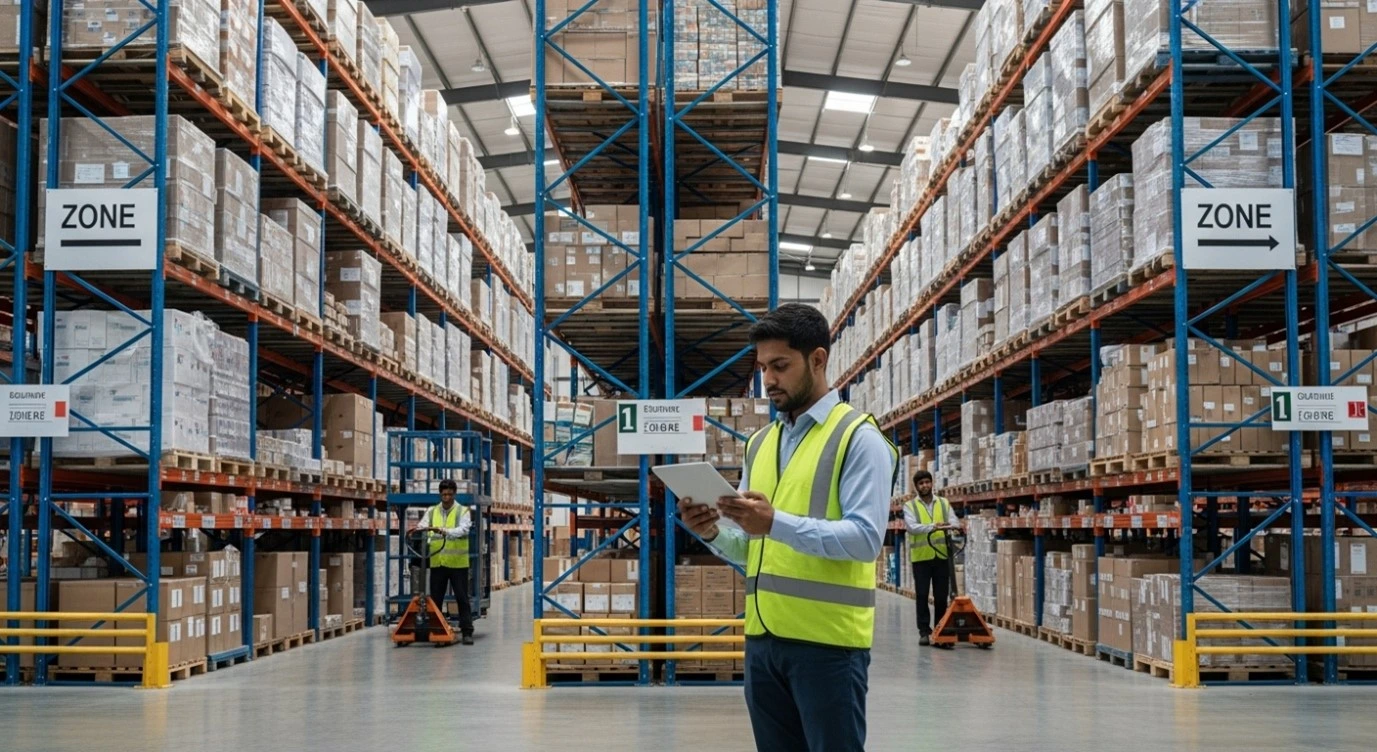
Companies that deploy accurate demand forecasting reduce inventory holding costs by 20% to 50% (McKinsey). Even conservative estimates place this reduction at 25% (Deloitte).
For a mid-sized distributor carrying ₹2 crores in inventory, a 25% reduction effectively frees up ₹50 lakhs in capital. These savings are achieved by eliminating the need for excessive “safety stock,” reducing the physical footprint required for storage, and minimizing the labor and insurance costs associated with managing bloated warehouses.
2. Eliminating Waste and Operational Drag
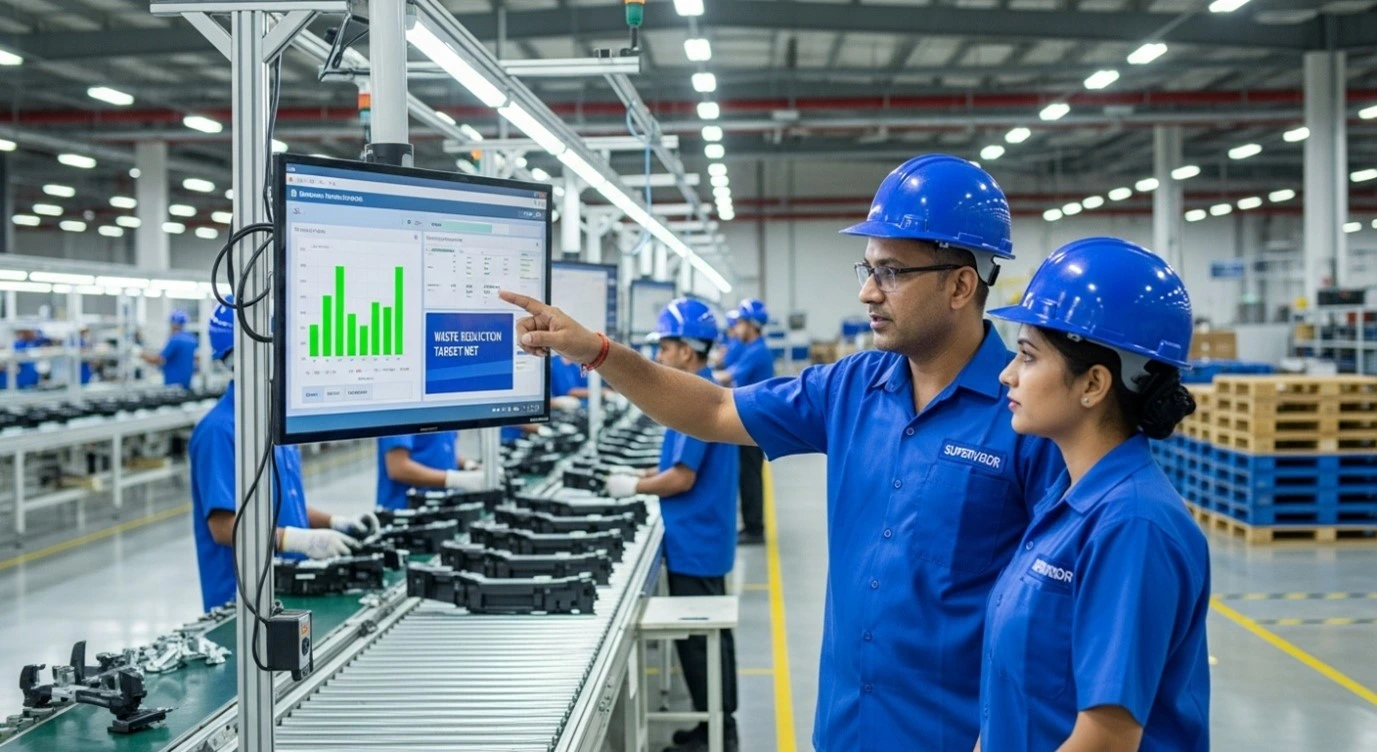
Manufacturing and distribution businesses using demand-driven planning reduce material waste by up to 60%. When production schedules align with actual demand rather than arbitrary targets, companies avoid overproduction runs that result in markdowns or write-offs.
Furthermore, aligning production with forecasts leads to a 22% reduction in operational costs. This efficiency stems from smarter resource allocation, production lines run at optimal capacity rather than idling or overworking, and labor is deployed efficiently rather than reacting to erratic demand spikes.

3. Protecting Revenue from Stockouts
The flipside of overstocking is the stockout, the financial damage of which is often underestimated. Research highlights a sobering statistic: 40% of customers switch brands after a single stockout experience.
Beyond the immediate loss of a sale, stockouts trigger emergency restocking costs, expedited shipping fees, and long-term reputational damage. In the FMCG sector, a 5% improvement in forecasting accuracy can translate to a 2–3% increase in profit margin, a swing that transforms a marginal operation into a highly profitable one.
The Hidden Ceiling: Why Spreadsheets Are Failing You
Despite these clear incentives, most Indian logistics companies and fleet operators still rely on Excel spreadsheets, email chains, and manual data entry. While seemingly cost-effective, requiring no software licenses or vendor dependencies, spreadsheets impose a “hidden ceiling” on growth.
The Error Multiplier
Studies show that carefully maintained spreadsheets often contain errors in 1 out of every 20 cells. In a forecasting model built on thousands of data points, these manual entry errors compound into wildly inaccurate predictions.
The Lag Effect
By the time inventory data is manually updated in a spreadsheet, it is already stale. Sales have happened, stock has moved, and demand has shifted, yet the forecast remains based on yesterday’s information. This data lag creates the very conditions that lead to stockouts.
The “Silo” Problem
Spreadsheets sit in isolation. They do not communicate with transport systems, warehouse management, or customer order platforms. This creates information silos where critical decisions are made with incomplete data. As operations grow, adding more SKUs, warehouses, or distribution channels, manual forecasting becomes unmanageable.
The Modern Solution: AI-Driven Transport and Warehouse Management
The alternative to the spreadsheet is a Transport and Warehouse Management System (TWMS) powered by AI and machine learning. Unlike static tables, these systems are dynamic engines of efficiency.
Unified Data Integration
Modern TWMS solutions aggregate data from disparate sources into a single truth. They ingest real-time feeds from sales channels (online, retail, wholesale), warehouse systems (stock levels), transport networks (shipment times), and external variables (traffic, weather). This convergence ensures the forecast model is always current.
Predictive Analytics
Machine learning algorithms detect patterns invisible to the human analyst. Research indicates that AI-powered forecasting reduces forecast errors by 20–50% compared to conventional techniques. These algorithms learn from historical patterns, account for seasonality and anomalies, and dynamically adjust predictions as new data arrives.
Real-Time Inventory Syncing
When warehouse staff pick an order, the system updates immediately across all locations and channels. Stockouts are predicted before they happen, triggering automatic reorder alerts. This capability typically improves inventory accuracy to over 95%, rendering manual stock-checking obsolete.
Route and Load Optimization
For transporters, demand forecasting feeds directly into logistics planning. Predicted demand informs optimal routing and load consolidation, ensuring vehicles run fuller and more efficiently. Optimized routing and load distribution can reduce fuel consumption by 15–20%, directly improving profit margins.
Why Indian Businesses Must Act Now
India’s logistics sector is undergoing a rapid transformation where competitive advantage flows from operational excellence. Forward-thinking companies are already adopting AI and IoT-powered systems to reduce operational costs by 20–30% and improve on-time delivery rates.
For businesses still relying on spreadsheets, the gap is widening.
The Working Capital Opportunity
Every rupee tied up in excess inventory is unavailable for expansion or equipment upgrades. Freeing 20–30% of working capital through better forecasting provides the liquidity needed for growth.
The Retention Imperative
In an era of abundant choice, the cost of acquiring a new customer to replace one lost to a stockout is 5–7 times higher than retaining an existing one. Demand forecasting is not just about cost reduction; it is a mechanism for customer retention.

Implementing Demand Forecasting: A Path Forward
Moving from spreadsheets to software does not require a complete operational overhaul. Modern TWMS platforms are designed for gradual implementation:
- Data Integration: Connect existing systems (sales, inventory, transport) to the TWMS. The system validates and cleanses data automatically.
- Baseline Forecasting: The system generates initial forecasts based on historical data.
- Validation: Run the system in parallel with current processes. Accuracy improvements are typically visible within 2–4 weeks.
- Full Deployment: Once validated, the system is deployed across the operation, continuously learning to reach 90%+ accuracy within 3–6 months.
Built for Purpose: The Solwer Advantage
For Indian logistics businesses, selecting the right partner is critical. You need a provider who understands regional variations, the informal logistics ecosystem, and the specific challenges of mid-sized operations.
Solwer, built by Denso, a company with over 50 years of experience in manufacturing and supply chain excellence, is designed precisely for this context.
Key Solwer Capabilities:
- AI-Driven Route Optimization: Calculates the most fuel-efficient routes based on real-time traffic and delivery patterns.
- Predictive Demand Analytics: Machine learning models that get smarter with every transaction.
- Real-Time Syncing: Ensures all warehouses and channels are always in sync, preventing stockouts.
- Seamless Integration: Connects with existing sales and accounting software, eliminating data silos.
- Scalable Architecture: Grows from 10 warehouses to 100 without requiring expensive infrastructure upgrades.
Solwer is designed by a company that has navigated India’s logistics complexity for decades. It understands regional distribution networks, the role of C&F agencies, and seasonal demand patterns better than generic global solutions.
The Decision: React or Predict?
The difference between reactive and predictive logistics is the difference between managing crises and preventing them. Reactive logistics is expensive—hidden in missed margins, expedited shipping, and lost customers. Predictive logistics is intelligent—aligning supply and demand by design, not luck. For Indian fleet owners and inventory managers, the cost of staying with spreadsheets is too high, and the barrier to switching has dropped. The window to catch up to early adopters is open, but it will not stay open forever.
Sources
- IHL Group. (2023). “Inventory Distortion Study: 2023 Report.” Global Retail Study. (Retail inventory distortion cost retailers $1.77 trillion).
- Extensiv. (2025). “Navigating Stockout Costs: A Guide for Ecommerce.” (Out-of-stocks increased 17.7% over 2022).
- PwC Analysis. Cited in ACES NWS. (2025). “How Overstocking and Stockouts Are Killing Your Working Capital.”
- ShipZip. (2025). “Demand Forecasting in Supply Chain: Top Methods & Best Practices.” (1% improvement in accuracy leads to 2% decrease in inventory).
- McKinsey & Company. Cited in The CodeWork. (2024). “How to Use Demand Forecasting to Reduce Supply Chain Costs.” (Accurate forecasting reduces inventory costs by 20-50%).
- Deloitte. (2024). “Demand Planning and Inventory Optimization Study.” (Average reduction of 25% in inventory holding costs).
- Procuzy. (2025). “How Demand Forecasting Reduces Manufacturing Costs.” (Reduces waste by up to 60%; reduces operational costs by 22%).
- **Harvard Business Review. Cited in ACES NWS. (2025). (40% of customers switch brands after one stockout).
- **NielsenIQ (2022) & Extensiv (2025). (Average stockout leads to 4% lost sales; CPG retailers lost 7.4% due to stockouts).
- LinkedIn. (2025). “How Demand Forecasting is Powering the Next Era of Logistics.” (5% forecast improvement = 2-3% profit margin increase for FMCG).
- ACR Journal. (2025). “Predictive Analytics in Supply Chain Management.” (ML reduces forecast errors by 20-50%).
- Intangles AI. (2025). “How AI is Revolutionizing Fleet Management Systems in India.” (AI routing reduces fuel consumption by 15-20%).
Explore more
Why Carbon Footprint Management is Becoming a Business Imperative
Manufacturers are at the forefront of the global effort to reduce carbon emissions. What was once a voluntary sustainability initiative has evolved into a non-negotiable business requirement. Today, managing carbon emissions is not optional—it is a strategic necessity that directly influences market access, brand equity, and long-term business resilience.

The Basics of Vehicle Digital Inspection: What It Is and How It Works
Discover how digital transformation is revolutionizing vehicle inspection processes, improving efficiency, accuracy, and compliance while reducing costs and environmental impact.

How Carbon Footprint Management Drives Corporate Financial Performance
How Carbon Footprint Management Drives Corporate Financial Performance